Read: Cultivating Resilience: Regenerative Practices On the Farm (Part 1)
Climate change has become the defining threat to smallholder prosperity today. Drought, erratic rainfall, destructive pests, and intense storms have the potential to ruin entire harvests leaving farmers with little income or even debt. As farmers cope with these challenges, there is risk of exacerbating the mal effects. By relying on tactics like heavy till farming or chemical fertilizers, farmers may yield high returns in the short run, but these practices are detrimental to long-term farm sustainability.
Regenerative agriculture is a holistic approach that restores environmental health, reduces carbon emissions, builds local resilience to climate shocks, and creates more stable, diversified income streams for smallholder farming families.
Regenerative agriculture is the solution to the myriad of challenges that smallholder farmers face. Done well, it offers steady income while building resilience to challenges, including climate stressors. To invest in this approach, we target four regenerative outcomes:
1) building prosperous and resilient livelihoods; 2) protecting and enhancing biodiversity; 3) improving soil and water health; and 4) reducing greenhouse gas emissions. We touched on the first two regenerative outcomes in our Part 1.
Soil degradation and high levels of greenhouse gas emissions can be pernicious byproducts of farming. A UN led study found that 24 billion tons of fertile soil is being lost per year, largely due to unsustainable agriculture practices. The FAO also attributes about 30% of global emissions to the agrifood system. Given these statistics, it may seem like all farms contribute to these outcomes, but that isn’t true.
Regenerative agriculture practices allow the cultivation of crops while also improving soil and water health, and reducing greenhouse gas emissions. Our clients are committed to these ways of farming, because they can sustain their livelihoods in the face of climate change while also stewarding the land they farm and the surrounding environment.
Outcome 3: Improving Soil and Water Health
Soil and water are crucial elements of farming. Without fertile soil and water, plants won’t grow or thrive. The maintenance of these elements is not passive. Through regenerative farming practices, farmers can make active choices that protect the health of their soil and water systems.
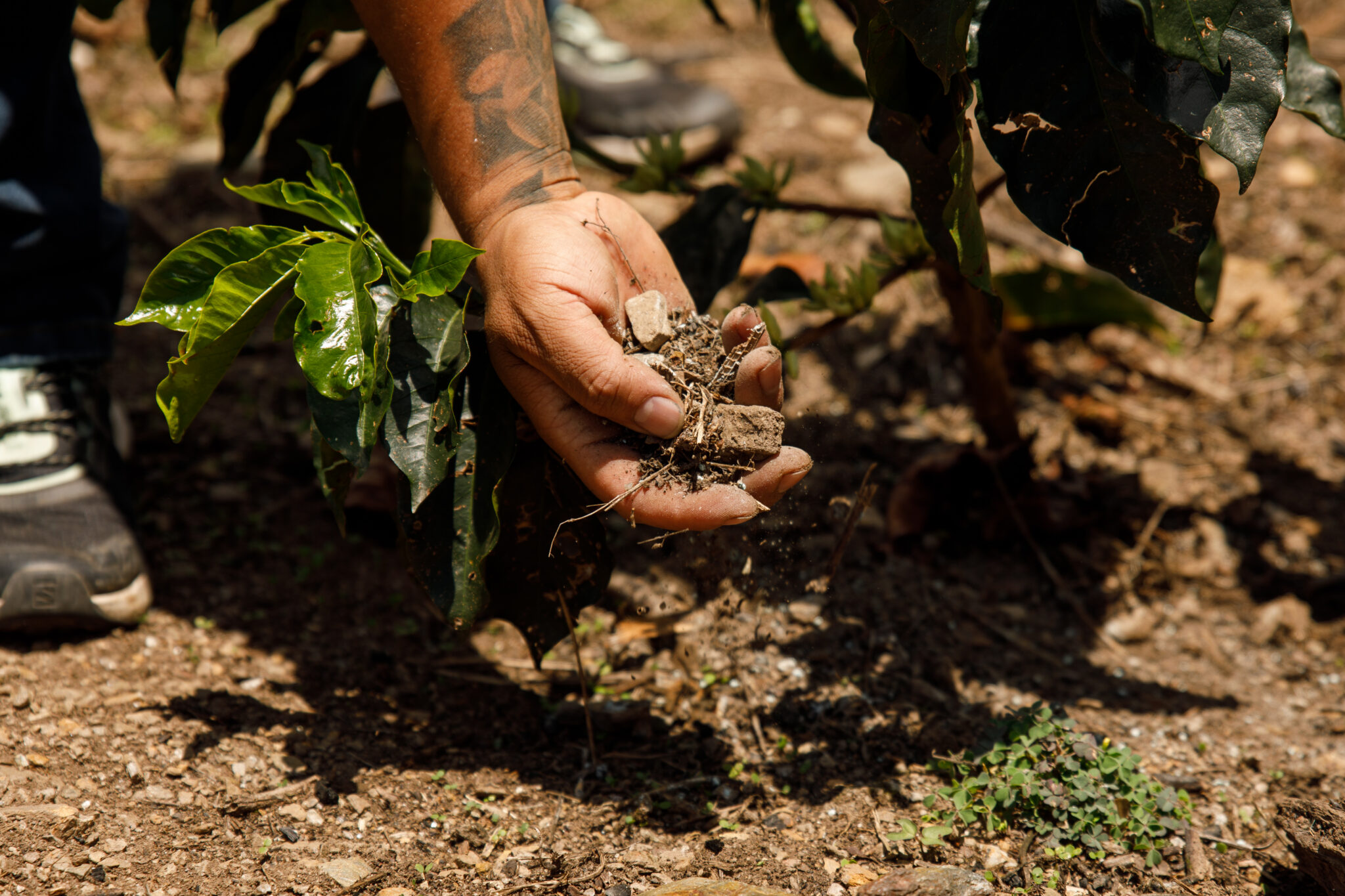
Soil and water go hand in hand. Soil heath is “the capacity of the soil to promote the growth of plants [and] protect watersheds [by regulating precipitation and filtering pollutants].” By focusing on and tending the soil, farmers also protect watersheds. One way to do so is through the use of organic fertilizers, instead of chemical fertilizers.
Organic fertilizers rely on natural materials – compost, animal manure, and other farming byproducts – to improve soil health and nutrition. These fertilizers increase crop productivity and restore soil health by retaining moisture, decreasing erosion, and returning microbes back into the soil. Root Capital client, Finca Churumpampa, has recently invested in a facility to create their own local, organic fertilizer.
In the northern highlands of Peru, Finca Churupampa works with approximately 400 coffee farmers who cultivate about 800 hectares. In 2023, Churupampa worked with our Agronomic and Climate Resilience Advisory team and found that action was needed across their farms – the quality of the soil and crop yield were diminishing. Peruvian farmers often struggle to access enough organic fertilizer to feed their soils, especially given the increasing scarcity of “guano de isla,” historically a major source of organic fertilizer in the region. So, as part of its Climate Action Plan, the enterprise focused on soil regeneration.
To jumpstart this work, we provided Churupampa with a one-time Resilience Grant to build a plant to produce organic fertilizer. The objective: improve farmer access to fertilizer to build soil health and increase crop yields. Churupampa worked with a specialized consultant to develop a highly nutritional fertilizer formula to enhance both the biological and chemical health of the soil.
With the plant built and the formula in hand, in 2025, Churupampa and Root Capital took the next step and designed a right-fit loan product to support the enterprise’s ambitions for producing the organic fertilizer in volume. Fueled by this capital, the enterprise significantly increased its fertilizer production.
Ultimately, organic fertilizers are one of the most critical inputs that a business can provide for its producers, because soil health is economical – farmers don’t need to rely on heavy irrigation or expensive synthetic additives. Root Capital climate loans are enabling Churupampa to not only promote greater productivity in a planet-friendly way, but to improve the livelihoods and well-being of its farmers.
Outcome 4: Reducing Greenhouse Gas Emissions
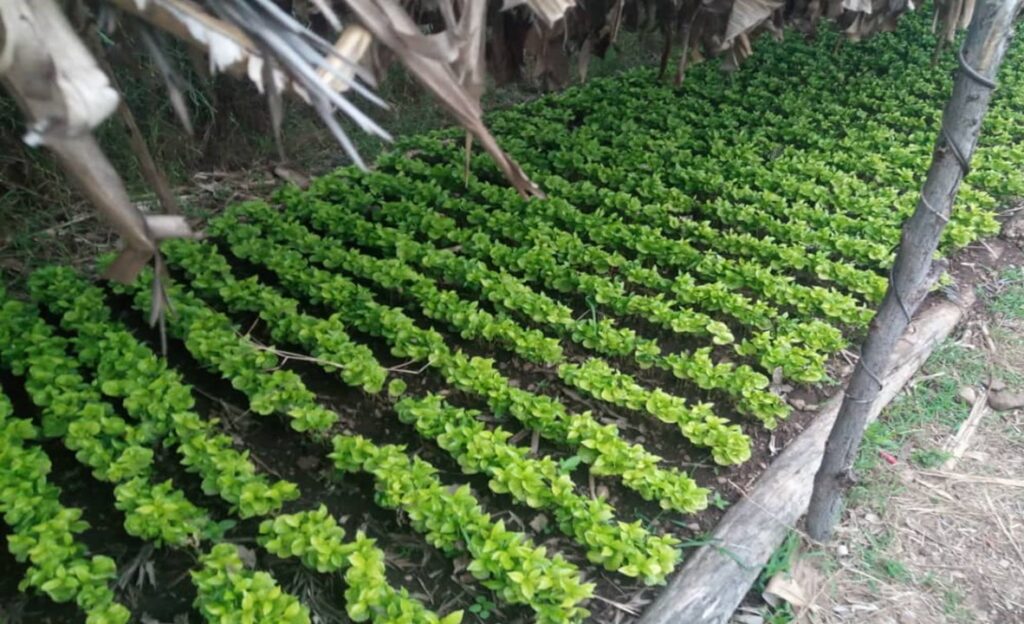
Agroforestry is a regenerative agriculture solution that features the intentional combination of trees with shrubs and crops to create a resilient ecosystem that benefits farmers, biodiversity, and the climate. On coffee farms, this practice is used by growing coffee plants beneath a canopy of taller trees, known as shade trees, rather than in the open. Shade trees on coffee farms act as powerful carbon sinks, capturing and storing significant amounts of atmospheric carbon dioxide in their biomass and the surrounding soil. Furthermore, by naturally cooling the microclimate, these trees reduce the soil’s carbon respiration rate, keeping more carbon locked in the ground rather than releasing it into the atmosphere.
Root Capital client, Rebuild Women’s Hope, champions agroforestry. On Idjwi Island, a remote island on Lake Kivu in eastern Democratic Republic of Congo, the coffee cooperative Rebuild Women’s Hope brings together over 3000+ smallholder farmers, more than 80% of whom are women. Run by a remarkable woman, Marcelline Budza, the cooperative is committed to actively promoting women’s rights and challenging gender restrictions, while stewarding a critical landscape. Eastern DRC is a biodiversity hotspot – in fact DRC is home to the largest intact forest landscape in Africa.
Root Capital began working with Rebuild Women’s Hope in 2019 by supplying a loan. This investment charted a path through the following six years. Despite continued regional turmoil, the cooperative steadily increased their sales and was able to achieve organic certification. As an agricultural business, Rebuild Women’s Hope continues to invest in regenerative practices – this past year, they distributed over 10,000 shade trees to their farmers. Because they are providing the inputs, they are making regenerative agriculture accessible to all their members.
In addition to reducing emissions, shade trees have considerable farm level benefits. They help increase soil fertility, increase food security for farmer families, and reduce climate risk – combatting dangerous heat and excessive rain that leads to erosion. Shade trees help restore biodiversity in spite of rising deforestation. These agroforestry outcomes are according to the Climate Adaptation Plan that Root Capital developed with them in 2025 through our Agronomic and Climate Resilience Advisory Services.