

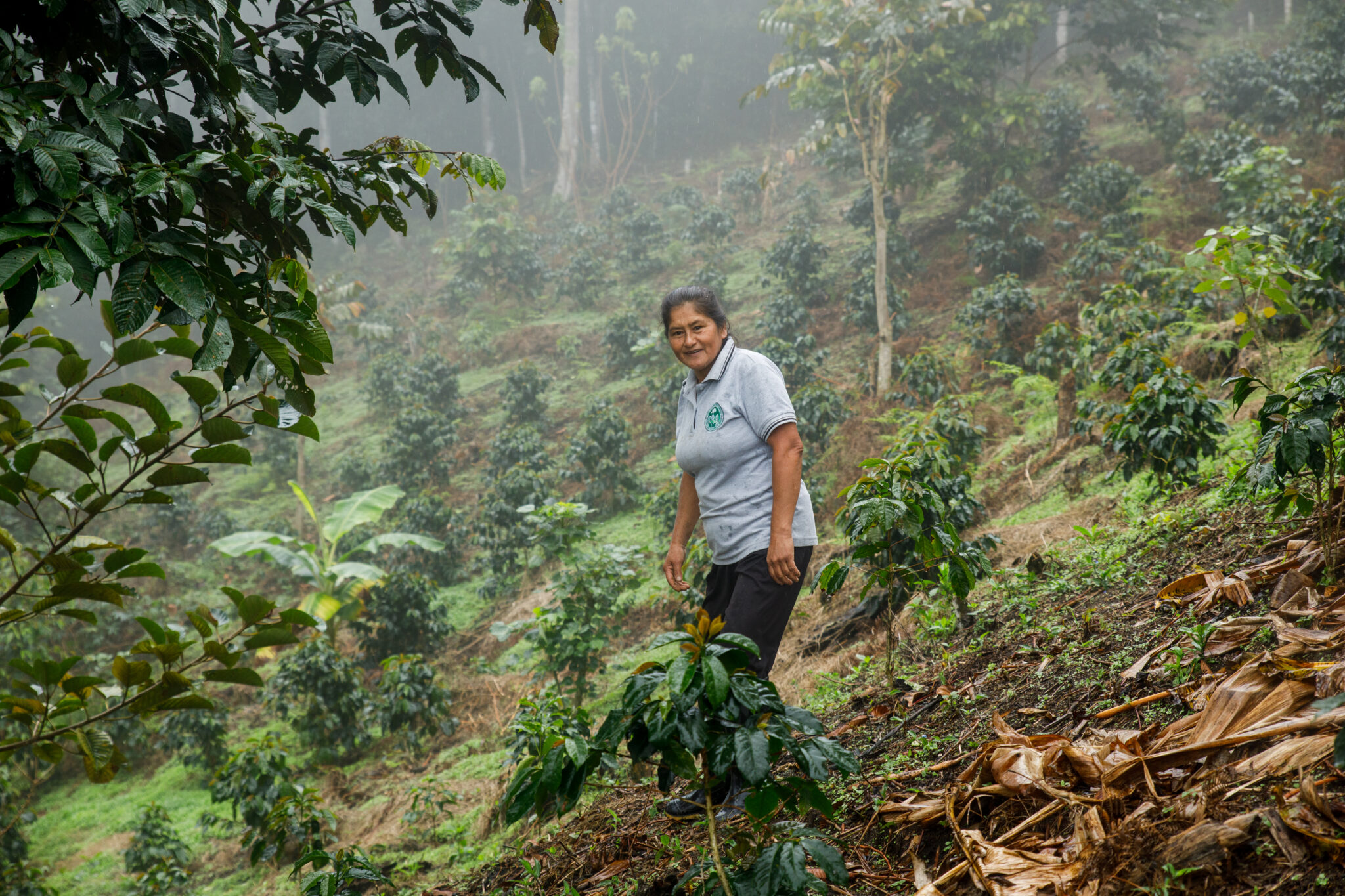
Modern farming techniques often overlook the real cost of application. Practices like monocropping return few nutrients back to the soil, while heavy tilling means stripping the soil of moisture. Once the soil health begins to decline, farmers rely on expensive inputs that don’t actually recreate the conditions of a healthy field.
Climate change exacerbates all of these issues. It brings inconsistent precipitation, intensifying storms, and higher temperatures. These disruptions often lead to crop losses, sometimes reported up to 25% during some seasons. Models predict an acceleration of losses in the coming decades, making climate change the defining threat to smallholder prosperity today. Ninety-five percent of Root Capital clients report experiencing climate shocks in recent years: from intense rains, mudslides, and drought in East Africa, South America, and Indonesia, to excessive heat and surging pest pressures in Mexico and Central America.
To remain viable, farmers will need to invest in solutions that help them adapt and build resilience. Regenerative agriculture is the answer, and Root Capital is committed to providing financing that makes these farm-level investments possible.
Regenerative agriculture is a holistic approach that restores environmental health, reduces carbon emissions, builds local resilience to climate shocks, and creates more stable, diversified income streams for smallholder farming families.
As a part of our new strategy, Root Regen 2035, Root Capital is changing the way we classify clients to reflect our commitment to regenerative agriculture and climate finance:
- Regenerative Businesses are agricultural enterprises that implement practices across all four of the listed key outcomes.
- Regenerative Leaders are agricultural enterprises that not only meet the requirements of a Regenerative Business, but they also disseminate these practices at scale. Specifically, these agri-businesses demonstrate that at least one core practice per outcome reaches more than 50% of producers, employees, or hectares (as applicable).
We target four regenerative outcomes: 1) building prosperous and resilient livelihoods; 2) protecting and enhancing biodiversity; 3) improving soil and water health; and 4) reducing greenhouse gas emissions. A myriad of practices contribute to these outcomes. They include agroforestry, soil conservation, farm diversification, agronomic training for farmers, and other approaches that contribute to environmental sustainability while supporting farmer livelihoods.
As part one of a two-part series, this post focuses on the first two regenerative outcomes. It’s impossible to discuss smallholder farming without recognizing that farm profitability and ecosystem stewardship have long been treated as separate — even competing — goals.
These realities may seem at odds, but regenerative agriculture proves that farming can be both a profitable and restorative practice. This holistic approach restores environmental health, reduces emissions, builds resilience to climate shocks, and creates more stable, diversified income streams for smallholder farming families.
Outcome 1: Building Prosperous and Resilient Livelihoods
One third of the global population — over 2.5 billion people — relies on small-scale farming for their livelihoods. People intimately depend on profitable farms in order to survive. Yet profit is far from guaranteed. Limited resources, lack of affordable capital, and restricted market access force these farmers to operate on razor-thin margins, already stretched thin before any external shock arrives.
In 1971, in the rural county of Cauca, Colombia, a collection of farmers created the Federación Campesina del Cauca (FCC). Initially formed to defend the rights to their land, improve the livelihoods and situations of their families, and organize small producers, FCC eventually became the conduit through which their members accessed both local and international markets at fair prices. Now a leading co-op of almost 600 coffee farmers, they not only ensure sustainable market access for their members; but have pioneered Fair Trade practices across Colombia and trained the next generation of farmers through their FCC Rural School.
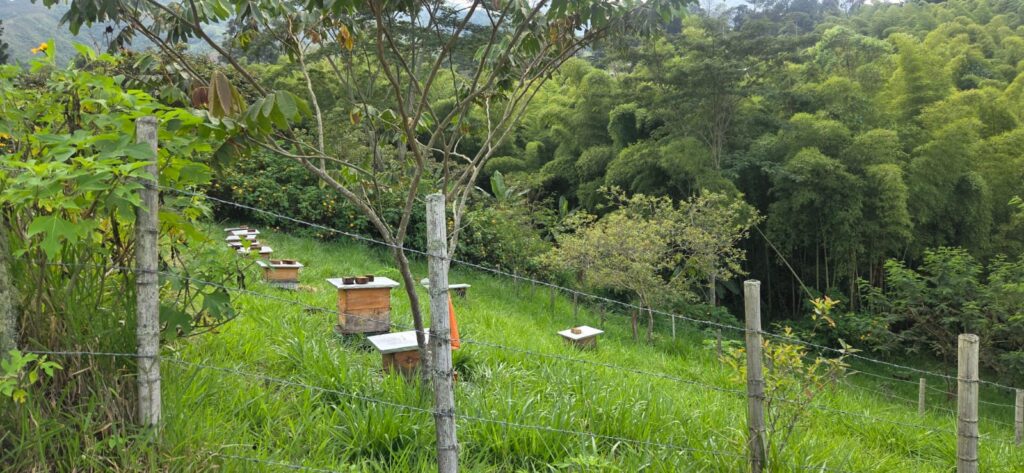
FCC and its farmers are constantly increasing their commitment to regenerative agriculture. Recently, they received a loan from Root Capital and used some of those funds to invest in beekeeping across some of their farms. Beekeeping boosts a farm’s crop yields and quality through highly efficient pollination, especially for fruits plants like coffee trees. It also provides diverse, low-maintenance revenue streams from harvested honey and wax. Ultimately, this creates a healthier, more biodiverse agricultural ecosystem that naturally supports soil and plant health.
20 farms in the FCC co-op, representing over 120 households, now run beekeeping projects on their land. In just a few seasons, these farmers have already seen impressive payoffs to their investment. Because the bees have augmented pollination and biodiversity, these farms have seen an increase in both coffee crop productivity and subsistence crop productivity leading to enhanced incomes and household food security.
Beekeeping has also promoted resilient livelihoods by providing an additional form of income. The farms that manage the beehives harvest the honey and can sell it in local markets. The increase in monthly incomes promote savings that make these farmers better prepared to deal with shocks to their coffee production.
Outcome 2: Protecting and Enhancing Biodiversity
Smallholder farmers don’t just manage their farms; they steward entire ecosystems. On the front lines of climate change, their choices ripple through landscapes and communities.
As global regulations increasingly shape access to high-value markets, Root Capital is working closely with clients to ensure they are equipped to comply with them. The European Union Deforestation Regulation (EUDR) is one of those directives. The EUDR bans the import and export of specific commodities, like cattle, cocoa, coffee, oil palm, rubber, soya, and wood, unless companies can prove they did not originate from recently deforested land. The EU has introduced these measures to protect biodiversity across supply chains, but the regulation’s technical demands — such as digital plot mapping and evidence of deforestation-free sourcing — places an unfair burden on smallholder farmers. Without access to reliable geospatial data and support interpreting it, many risk being excluded from global markets entirely.
To support our clients in coffee and cocoa supply chains, we’ve launched an EUDR Advisory Service to provide businesses with:
- Practical, localized training on EUDR requirements
- Low-cost, digital tools to map farms and organize geospatial data for buyers
- Access to our partner’s world-class geospatial analysis tools to demonstrate deforestation-free compliance and monitor future deforestation risk
By equipping farmer businesses with the tools and knowledge they need, we aim to foster a more equitable climate transition that includes smallholder communities.
Root Capital client, Asociación Chajulense, represents these smallholder farmers. A long-standing coffee cooperative in Guatemala’s Western Highlands, the cooperative has been a Root Capital lending client since 2006 and an advisory client since 2012. More recently, Asociación Chajulense has worked with Root Capital to prepare its farmers to meet the requirements of EUDR.
To do so, Root Capital has partnered with Satelligence, a nature-tech company that uses satellite-powered geo-data to deliver real-time deforestation monitoring data to actors in the agricultural supply chains. Root Capital complements this with hands-on support, providing free access to satellite monitoring, training on geospatial data collection, and tailored coaching from agronomic experts to help enterprises assess and respond to deforestation risks. Crucially, our model ensures that clients retain ownership of their data and are equipped to use it to make strategic decisions.
Asociación Chajulense is beginning to integrate these tools into their operations, using interactive dashboards and visualizations to improve the accuracy and quality of their geospatial, data collection efforts. These digital insights can improve internal controls and sharpen their response to potential non-compliance. By building their capacity to comply with the EUDR, Asociación Chajulense can maintain EU market access for itself and its farmers while gaining greater visibility into potential deforestation risks within its supply chain.
Tackling deforestation is vital to combating climate change and biodiversity loss. By keeping forests intact, farmers help safeguard vital genetic diversity, maintain natural ecological processes, and protect wildlife habitats that sustain global biodiversity.