

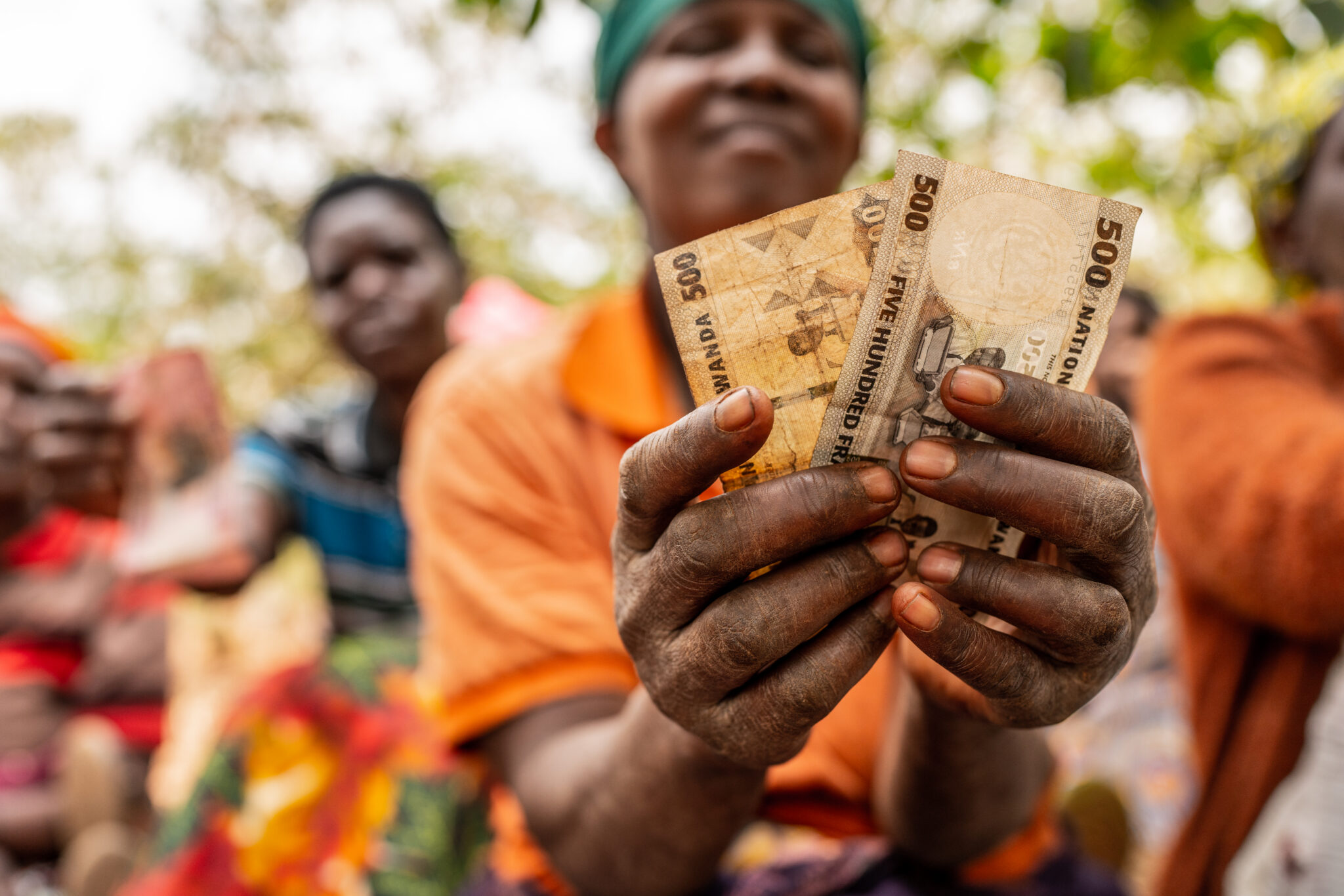
Read: The Next Harvest: Learning and Impact from Root Capital’s Women in Agriculture Initiative 2021-2025
note: Kasaali figures have been updated since the report’s publication
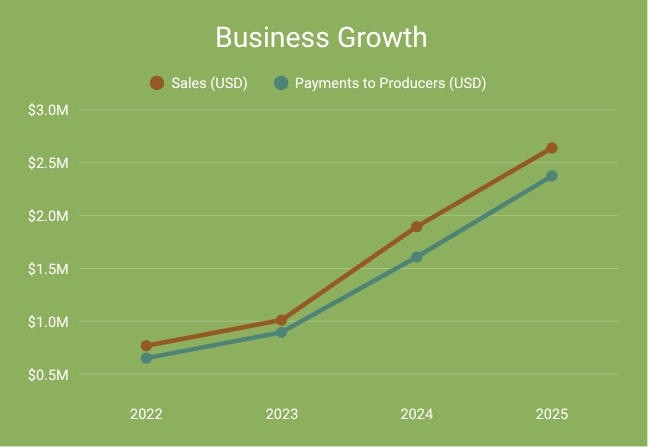
When we began working with Kasaali, the Ugandan coffee cooperative had never received a loan above $50,000. In 2022, none of its managers were women. Today, Kasaali’s sales have more than tripled, its payments to farmers have grown nearly fourfold, and women hold 43% of its management roles.
Kasaali is one of the stories in The Next Harvest, our new report on five years of the Women in Agriculture Initiative (2021-2025). That strategy set out to prove what we already knew:
Investing in women isn’t a gimmick; it’s smart business.
Though women are essential to agrifood systems–making up 42% of the global workforce–they are more likely to hold informal roles and earn less than men. Rural women play pivotal roles in agri-SMEs, even as they face systemic barriers to land ownership, finance, training, leadership opportunities, and decision making.
We apply a gender lens to every investment and advisory service we provide, and we offer financing and programs designed specifically for women leaders and farmers. Our 2022 Inclusion Pays report, which drew on a decade of our own lending data, found that women-inclusive and women-led businesses have lower default rates and more stable revenues than their peers— showing that investing in women is not only equitable, but financially sound.
Since 1999, we’ve disbursed $1.33 billion to women-inclusive and/or women-led businesses and reached 687,000 rural women through lending. By the end of 2025, nearly two-thirds of our lending portfolio was women-inclusive or women-led.
Kasaali & Root Capital
Though it was a well established cooperative, Kasaali struggled to access the financing needed to meet its mission: to improve livelihoods through good agricultural practices, crop finance, sustainable markets, and environmental conservation.
After first participating in our Business Management Advisory to strengthen financial literacy and governance, Kasaali received a $150,000 working capital loan, subsidized through our SIINC mechanism.
Our Social Impact Incentives (SIINC) model is an outcomes-based funding instrument that rewards verified social impact. It lets us lend to early-stage women-inclusive and women-led businesses beyond the reach of conventional lending by offsetting the cost of small, high-impact loans. SIINC loans are just one example of the kind of innovative financing that we provide.
Over the years, we’ve learned that scaling women’s inclusion requires more flexible funding and responded with new financial products, like Gender Equity Grants which help clients remove practical barriers to women’s participation and leadership.
For Kasaali, that first early-stage loan became a platform for wider change. We continued to make larger investments and impact flourished: sales more than tripled, payments to producers increased nearly 4x, and women’s inclusion efforts prospered (see graphs below).
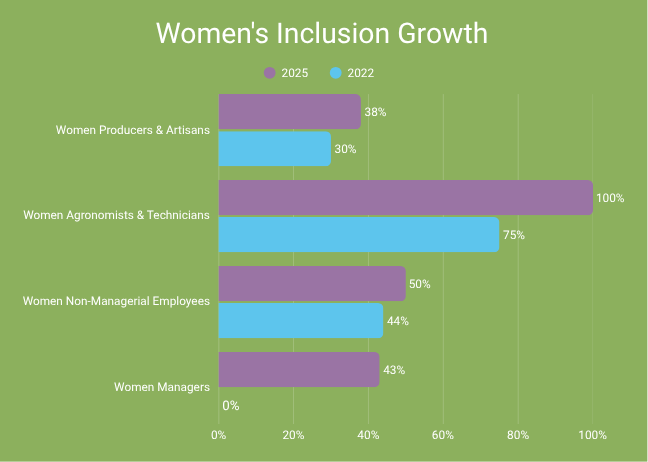
Kasaali put in place policies prohibiting gender discrimination and sexual harassment and trained staff on gender equality and gender-mainstreaming. Alongside financing, Kasaali received Business Management Advisory, Gender Equity Advisory, Digital Business Intelligence, and Agronomic & Climate Resilience Advisory services.
Advisory services are central to our work. Tailored capacity building helps businesses better qualify for financing and integrate gender, youth and climate resilience into their operations. After finding gaps in our advisory services, Root Capital did two things: developed women-focused versions of our existing advisory modules and started the Gender Equity Advisory service.
As Kasaali has grown, it’s continued to invest in its women members. Soon after the initial loan, Kasaali partnered with us to start a Savings and Credit Cooperative Organization (SACCO). The SACCO is open to all members of the cooperative, but women benefit in specific ways.
Our evaluation of Kasaali’s SACCO program found that members saved an average of $776 more per year (equivalent to 2.24x the monthly cost of a decent standard of living for a rural Ugandan family).
Compared with women at a similar cooperative, women participating in Kasaali’s SACCO were more likely to participate in day-to-day household financial decisions and track their spending, and felt more confident they could borrow in an emergency.
Over the past five years, our global SACCO program has grown to reach 628 members, more than half of them women. In total, these SACCO members have saved $151,960 in their own names, and SACCO membership increased the likelihood of a woman holding a formal financial account by nearly 30%.
Kasaali is just one of many examples of what our clients achieve in a short time when they have access to adequate and suitable financing, proving that investing in women-inclusive businesses and targeting specific needs of women in agriculture yields impressive returns.
As we look to the next five years of the Women in Agriculture Initiative, we will continue to strengthen the business case for women in agriculture and meet their specific financing needs.
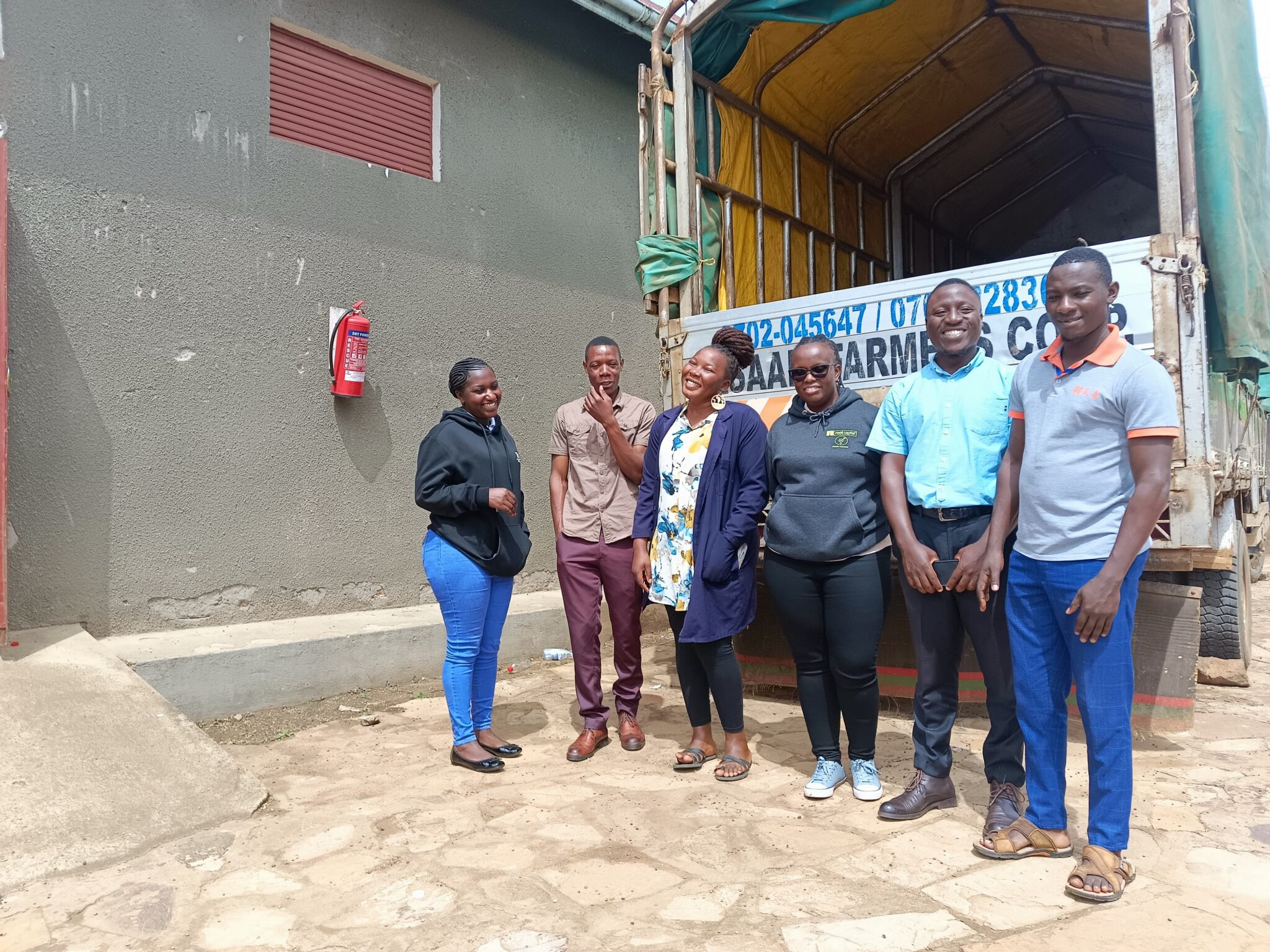
Read more about Kasaali and our other clients in The Next Harvest.