


Root Regen 2035
Growing Smallholder Prosperity, Inclusion, and Climate Resilience in the Regenerative Decade
The Challenge
One third of the global population – over 2.5 billion people – relies on small-scale farming for their livelihoods. Limited resources, lack of affordable capital, and restricted market access force these farmers to operate on razor-thin margins – already stretched thin before any external shock arrives.
For 570 million smallholder farmers, that shock has arrived and it is intensifying. Climate change has become the defining threat to smallholder prosperity today. Without intervention, it is expected to push 135 million people into poverty by 2030, erasing decades of development progress.
To remain viable, farmers will need to invest in solutions that help them adapt to and build resilience in the face of a changing climate. But solutions for adapting farming practices and deploying new infrastructure and technologies require greater upfront investment than conventional farming, with increased yields and incomes taking several years to materialize, as soils and other natural resources recover.
Farmers with limited savings will require immediate financing to realize these benefits. Yet, currently, less than 1% of global climate finance is directed toward small-scale agriculture.
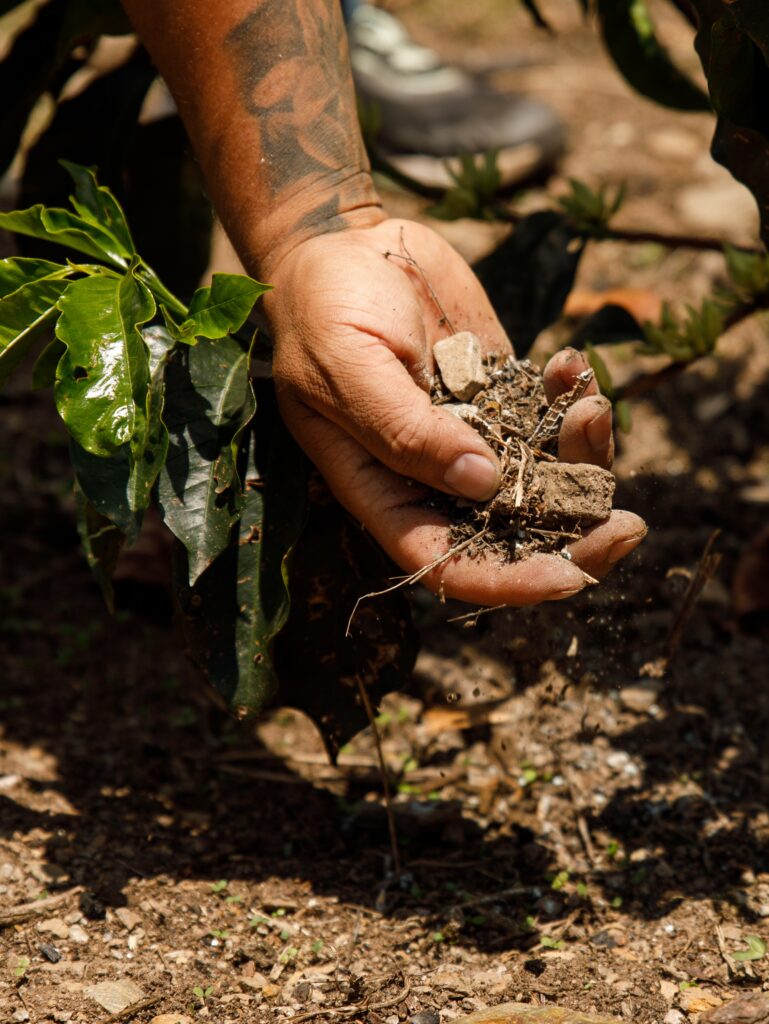
Caption: Farmer shows soil health. Laguna de los Cóndores Cooperative, Peru.
The Opportunity
The solution to growing smallholder prosperity in the context of a changing climate lies in ramping up and sustaining massive global adoption of regenerative agriculture. This is a holistic approach that restores environmental health, reduces carbon emissions, builds resilience to climate shocks, and creates more stable, diversified income streams for smallholder farming families. Regenerative practices such as agroforestry, organic soil management, and crop diversification go beyond helping farmers survive the climate crisis to help them thrive by improving yields, reducing input costs, and providing access to premium markets that reward sustainable practices.
Achieving this at scale requires partnering with tightly knit local farmer networks that can reach, influence, and accompany millions of farmers efficiently and effectively over the long term. Some of the best examples of such “first mile” farmer networks are the agricultural small- and medium-sized enterprises (agri-SMEs) that collectively organize hundreds to thousands of farmers. These businesses, which include producer-led cooperatives and agro-processors run by rural entrepreneurs, connect farmers to markets and provide critical service bundles combining training, inputs, credit, infrastructure, and market access. As businesses run by and for the farmers they support, agri-SMEs are among the best suited networks to understand farmers' needs and to design, deliver, and sustain customized solutions.
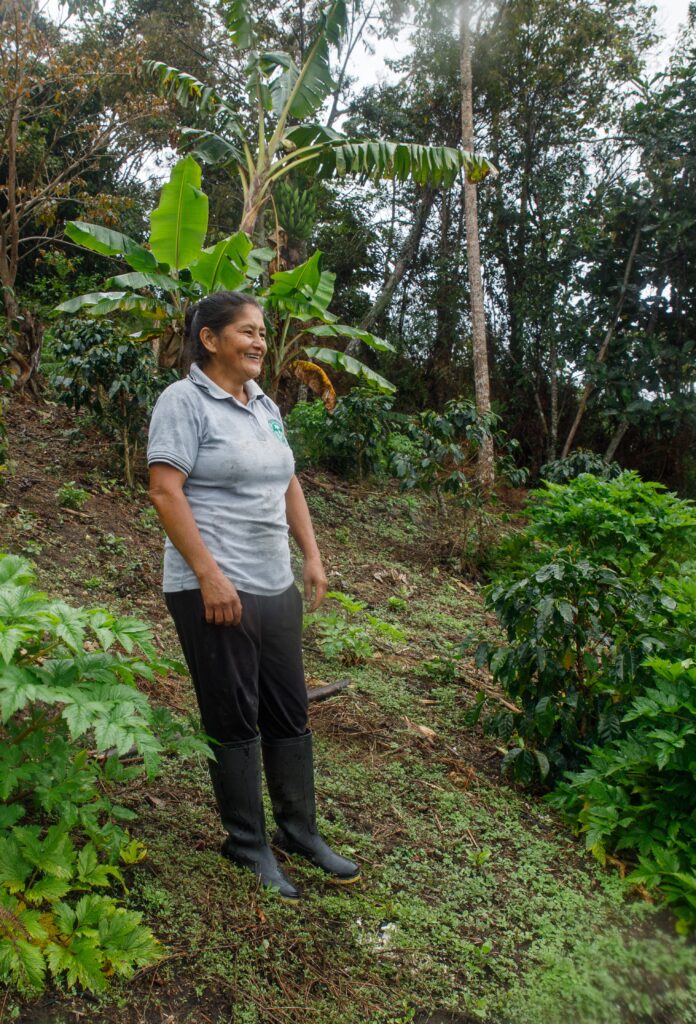
Caption: Female farmer inspecting her farm. La Flor de Cafe Cooperative, Peru.
Our Path Forward
Our 25-year track record has demonstrated that agri-SMEs are the right vehicle to deliver smallholder prosperity. But the intensifying climate crisis has revealed a gap our current model was not built to fill: the massive, urgent need for climate-specific financing that reaches farmers directly and at scale. Root Regen 2035 is our vision and response. It builds on our history to expand what Root Capital does and how we do it, and is designed to meet a moment that demands more of our sector.

Advance
Advance farmer prosperity & resilience through a global platform of regenerative agricultural businesses

Create
Create new products, services and partnerships to build climate-resilient communities and businesses

Transform
Transform the agrifinance market and accelerate transition to regenerative food systems through collective action to fill the smallholder finance gap
Our Impact Goals by 2028
400
agri-SMEs receiving Root Capital's essential service bundle each year, reaching 800K farmers (representing 4M people in farming families) annually
$600M+
disbursement in capital to fuel the growth and impact of agri-businesses, enabling agri-SMEs to pay producers $3B for their crops (market-dependent) and including $15M in climate finance
550K
farmers with meaningfully higher income, representing 2.8M people in farming families
220K
women farmers with meaningfully higher income
60M
hectares under sustainable management
